
Dave Kirkpatrick — Care Partner
A retired surgeon and father, Dave Kirkpatrick walked alongside his daughter Meghan through fourteen years of synovial sarcoma — three recurrences, countless treatments, and a love that never stopped looking for the next answer. He shares what Meghan taught him about living one day at a time.
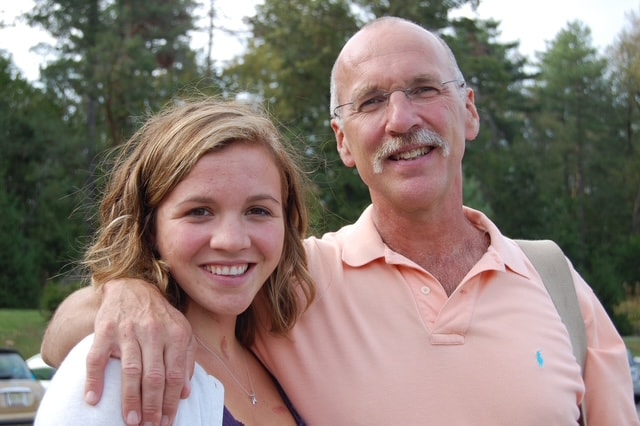
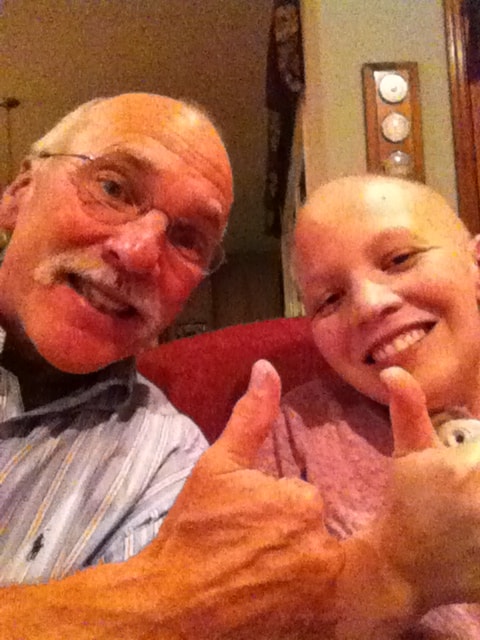
Before Cancer
Grew up in western Pennsylvania, college education at The College of Wooster (Wooster, Ohio — 1977), medical school in Cleveland (Case Western Reserve School of Medicine — 1981), General Surgery residency at University of Cincinnati (1981–1986). I was in private practice general and peripheral vascular surgery from 1986–2020. I then was the Regional Chief Medical Officer at Bethesda North Hospital in Cincinnati from 2019–2023.
Cancer Diagnosis and Treatment Journey
My story really is about our daughter Meghan Rebecca Kirkpatrick (July 2, 1987 – March 10, 2014). She was first diagnosed in 7th grade (2000) with a lump under her jaw that was removed and found to be a synovial sarcoma Stage 1. Her treatment at that time after surgery included chemotherapy and neck radiation over a 4–6 month period. Her first relapse occurred in 2005 as a senior at St Ursula Academy in Cincinnati. This was a local recurrence in her neck which required a more extensive surgical resection again followed by chemotherapy over several months. She graduated from high school with a wig and a crooked smile as a result of the surgery and chemotherapy and then attended and graduated from Denison University with a Bachelor of Arts degree (2009). She then enrolled in a 2 year Masters program at East Virginia Medical School for Art Therapy. She had another local recurrence of the tumor in her neck toward the end of her first year (2012) and required a very extensive surgery for resection as well as localized radiation with radiation seeds in her neck. She then had difficulties with swallowing and airway restriction due to the radiation as well as further local tumor recurrence in her neck. She never recovered adequately to return to her graduate school and developed a metastatic tumor in her lungs as well as more extensive tumor growth in her neck. She ultimately died on March 10, 2014 surrounded by family.
Meghan's life was changed most significantly following the first recurrence when she was a high school senior. She became much more worldly and embraced life on an every day basis. She was initially saddened after the second recurrence and then was truly resilient in appreciating what life had to offer each day. She taught my wife, her sister and me how to live life one day at a time.
Current State, Reflections, and Outlook
From my own standpoint, the experience of being a medical provider and having a loved one on the patient side of things made me much more empathetic to what it is to be a patient and I believe I learned to communicate with and advocate for my patients in a much better way. I no longer "sweat the little things" and I am comfortable reaching out to offer love and support to friends who are experiencing tough times as I know to a degree how they are feeling and had good friends reach out to me in my tough times. I had conversations with my daughter over her years as she was evolving to become an art therapist about our shared belief in the value of human contact and I had hoped that we could offer talks or support groups to others after she was finally recovered. Participating in contributing to the chapters in this book has been as close as I can get to sharing Meghan's wisdom and story with her alongside me.
Charting My Cancer Journey
What follows is my personal journey through cancer — the highs, the lows, and the mental battles in between.
In each section, I'll open up about what I experienced and how I learned to move from difficult emotions like fear, anxiety, and despair toward courage, peace, and hope.
If you're walking this road too, I hope these moments help you see that you're not alone — and that shifting your mindset can become a powerful part of your healing.
Shock to Acceptance
Can you take us back to the moment you heard the diagnosis? What did that shock feel like, and what helped you start moving toward acceptance?
I am a retired physician who was in active practice in 2000 when our daughter was diagnosed with a rare cancer in her neck — synovial sarcoma. That occurred in March, 2000 when she told me she could feel a lump under her jaw and wondered if it was a tumor — she was 13 years old at the time. My moment of shock occurred when we obtained a CT of her neck and I saw the tumor and noted that it was restricting her airway to the point that she required an urgent tracheostomy so she wouldn't lose her airway in case the tumor had any sudden expansion due to something like a small amount of bleeding into it. Two days later she underwent surgery to remove the tumor and the surgeon indicated that this was a malignant tumor and the pathologist confirmed this to be a synovial sarcoma. My shock was manifested by a complete feeling of initial helplessness since I knew that most sarcomas are bad actors and typically survival depends upon early diagnosis with complete surgical removal. I often described my feeling as if someone had opened my head and stirred my brain and it wouldn't stop spinning.
I fairly quickly (within 24 hours) moved from shock to acceptance as I wanted to learn as much as I could about this type of tumor and also who could help to take care of it. I was able to look into medical literature fairly readily and had several oncology colleagues who I could ask for interpretations of studies and treatments. Treatment of sarcomas was something I knew of only from a surgical perspective and sarcomas were something I always had a profound degree of emotion about as I knew that many sarcoma patients ultimately succumbed to the tumor. Having this happen to my daughter was brutal. My wish was for this somehow to be for me to do the suffering and maybe die and for her to be spared.
During this time I did a lot of praying and was always asking others to pray for our daughter as well. I believed that more prayers being offered for her would somehow give her a better chance for a good long term outcome. In all honesty, I no longer believe this. My wife and I approached this very differently. I was in need of sharing my wishes and fears with my family and friends and my wife found it difficult to talk to others about this due to her wish for privacy. She never asked me to refrain from my communication with others about this and we always made sure to address with each other how we were feeling and what we were thinking. We also specifically made it a point to sit down with our other child, another daughter who was 18 months older, and indicate that we wanted her to know that she could talk freely with us about her fears as well as to let her know that we loved her equally even though we were required to place much more time and effort into caring for her sister.
The ultimate coping strategies for me in going from shock to acceptance were: 1. Allowing myself to be as open as possible with my friends who all would offer to "do whatever I can for you" — when in reality all they could do was say they cared — and then humbly accepting any help they could offer. I was always much more comfortable doing for others, so allowing and accepting others doing for me was a big step. And 2. Truly learning to take things one day at a time. It is a common bit of advice, but truly making oneself not worry about tomorrow until it comes was not an easy task. It is human nature to look ahead and fear the worst. Doing so made me waste energy and awareness of the present until I truly accepted that this was a journey that I couldn't fully control. There were good parts along the way that shouldn't have been missed.
Fear to Courage
What fears began to surface after your diagnosis, and what helped you take your first steps toward courage despite them?
I can vividly remember the first feeling of fear when we heard the cancer diagnosis for our daughter. She had a lump in her neck that had been removed and the pathology report returned 2 days after the surgery when she was still in the hospital recovering. The hematology/oncology fellow came in on rounds and matter of factly stated that the lump was a malignant tumor — a synovial sarcoma. As a 3rd year medical student, one of my first patients on my pediatric rotation was a young boy with a sarcoma who ultimately died. I never forgot him and when I heard that my daughter had a sarcoma I became numb and felt a helpless feeling that I will say was fear. My daughter was in 7th grade at this time and as she processed what was being told, she looked at me and my wife and asked us if she was going to die. The fear and helplessness didn't disappear but was superseded with a feeling of energy and I told her that we were going to do all that we could to make sure that wasn't going to happen. I don't think the fear ever was replaced — rather it was pushed back to allow for courage, energy, and strength to play a role. The first trip back to the hospital for a 5 day stay involving the first round of chemo is also particularly vivid and I remember telling my wife that I felt like we were entering a black hole. On a similar note, every time a new CT or MRI occurred, fear as to what it would show was always there, but I would say I got used to it rather than saying it wasn't there.
Dealing with the fear was an evolution and involved conversations with our daughter and deciding who and what was going to "run her life" — was it the tumor or was it her? She was an incredibly insightful person at a young age and chose to take on a positive outlook. One of our friends made the comment that no matter how many setbacks she had, she would "reboot to positive." One of her favorite phrases was "Life is uncertain, eat dessert first." Those conversations and that outlook helped me to push fear into the background in favor of energy and courage.
As far as support in dealing with the fear and challenging times, I can unequivocally state that being able to communicate with family and friends who were open and comfortable enough to accept listening to my fears was incredibly helpful. Communication and dialogue with my wife and our other daughter was paramount, and allowing our daughter with the sarcoma to have a counseling outlet other than family via Cancer Family Care was also beneficial. I don't think the feeling of fear ever wasn't there — it simply wasn't in the forefront.
My advice for anyone experiencing fear as a result of a cancer diagnosis is this: It's normal to feel it. The fear may never truly go away, but it absolutely doesn't have to dictate how you live your life. Taking on the mindset that it is your body and you get to choose your attitude is empowering. It isn't necessarily easy to do so, but not giving in to fear or helplessness allows you to experience positivity. Additionally, human contact is therapeutic. Keeping fears and feelings to yourself allows them to have more influence than they deserve. As humans, we do better with contact with others, so making the effort to allow that to occur will pay dividends.
Depression to Joy
During moments when you felt weighed down or overwhelmed, what did that season of depression look like — and what helped you begin finding joy again?
When reflecting on moments of depression in my experience I am finding it difficult to separate depression from simultaneous feelings of fear. For me, the two were continually linked. Probably the greatest depression times were when we learned that the sarcoma had recurred in our daughter — which happened twice. Learning this and then having to see her reaction each time was brutal. The worst depression was when we learned that the final recurrence showed untreatable local and metastatic tumor and then it was only a matter of time. I remember making the comment to a friend that my "Joy meter" was never going to make it to a "10" ever again. Joy was something that we initially truly lost for several months each time as fear and "hunkering down" to tolerate surgery, chemotherapy and radiation treatments took precedence. During those times it was difficult to sleep through the night and food was only an afterthought. We had small moments of happiness and laughs and when one of the treatment modalities was done or one of the surgeries had been recovered from, we would feel like a weight had been somewhat lifted.
Strategies that helped were anti-depressants for both my wife and our daughter. I chose not to take them and coped by continuing with my responsibilities as a surgeon and getting exercise when time permitted. I have always felt better when I could work out enough to sweat and get some endorphins flowing. Our daughter did find that the anti-depressant meds allowed her to not dwell upon the negative as heavily. My wife didn't think they helped much and she weaned off of them over a period of weeks after 3–4 months. Also, counseling with Cancer Family Care was something that proved helpful for our daughter as it allowed her to share her fears and sadness with someone not so emotionally attached to her and gain some strategies for managing those feelings. Our daughter had been very active and with each recurrence she lost some stamina and strength. She coped by keeping a constant stream of texts and phone calls with her friends and learned new skills. First, it was pottery making and she did well with it until she lost some stamina. Then she turned to knitting and was able to make sweaters, hats and mittens for many friends and relatives. It definitely brought joy to her to give her pottery or knitted garments to others. So, to summarize, a non-pharmaceutical coping strategy was being able to do something — anything — for someone else.
Family and friends were always at the center of support and an openness to sharing feelings with others is, in my mind, very important. Getting out of focusing just on yourself and involving others who want to help but don't necessarily know how is helpful. Just letting them know that being available to lend an ear or convey some love is of benefit. Being honest about how you are feeling and then being willing to share that with someone else seemed to be of help. Cancer and the treatments involved almost always bring physical limitations so being creative in figuring out what else you still can do is a good tack.
Anxiety to Calm
When anxiety began to take hold, what thoughts or situations triggered it — and what helped you find moments of calm in the midst of it?
The first moments of anxiety for us came with the initial diagnosis of a sarcoma in our daughter's neck. It actually was of such a size and in a location that it made undergoing an urgent tracheostomy necessary in order to protect her ability to breathe. There was concern that even a small amount of swelling in the tumor or bleeding into the tumor would restrict her already narrowed airway to the point that breathing may not be possible. Anxiety then never truly left our lives but I think we simply got used to the fact that there was always a chance that the tumor may be causing some symptoms. Our daughter always had some anxiety with scans, new aches and pains, new sore throats or headaches and was remarkably resilient in continuing on each day. Physical symptoms of the anxiety were difficulty sleeping or falling back to sleep after awakening in the night. Also, not surprisingly, my blood pressure rose and I started having palpitations and an intermittent elevated heart rate. Blood pressure medicine helped but the occasional elevated heart rate still occurs when I have times at night when it is difficult to get back to sleep. "Scan-xiety" was almost always a real thing even though there were two intervals of yearly scans that were "good." They were ultimately followed by "bad news" scans and this simply reinforced the anxiety for each subsequent scan.
Moving from anxiety to calm wasn't a conscious move as much as it was simply getting used to the fact that this wasn't a bad dream and it was going to be present every day to some degree. The only advice I could give on managing this goes back to what I had stated earlier: deciding who will control your life. Will it be cancer or you? Taking on that mindset allows a feeling of being in control even in the face of bad news such as a recurrence of the tumor or new growth of a tumor elsewhere. Facing that type of news with an "I'm still in control of me" attitude makes such a difference in that you are now doing something to the tumor instead of the tumor doing something to you. I think knowing that anxiety can still be present and that you can get used to it being there is probably the most meaningful insight I can offer on this category.
Loss to Fulfillment
What did you feel you lost through your cancer journey — and how did you begin to rediscover a sense of purpose or fulfillment?
Our daughter was resourceful in dealing with the losses caused by her tumor. She lost time with friends in school — high school, then graduate school — and she gradually lost physical capabilities related to strength and stamina and then later related to being able to swallow. She was able to spend time connecting with friends via FaceTime and texting which was very helpful. From a physical perspective she accommodated by choosing less physically taxing outlets. She was always very "artsy" and initially decided to learn pottery making until her stamina wouldn't allow her to spend the time she wanted at the wheel. She then turned to knitting and making items for friends and families. She had made many pottery items which were given to friends and family as well and the knitting was simply a new method for making things to give to those she cared about. I believe the fact that she could create things to give to others was her way of trying to transform her losses into fulfillment.
Anger to Gratitude
Did you experience anger during your journey — toward your situation, others, or even God — and what helped you begin shifting toward gratitude?
I don't believe our daughter (nor my wife and I) ever moved from anger to gratitude. Our daughter had fear at the outset and then when the tumor recurred she definitely had anger, along with sadness. On only one occasion did she express her anger that we saw. It was after the first recurrence and she was so mad that she took a coffee mug and went out onto our driveway and threw it down as hard as she could to smash it.
Pieces indeed flew everywhere but it almost immediately felt to me that she saw that it didn't help at all to do that. I think that in the moment it allowed an energy release but she saw quickly that it didn't make anything better. From my personal perspective as her parent, I was mad that this happened to my daughter and have spent years trying (unsuccessfully) to understand how or why this could happen. I would say the journey was from anger to sadness to resignation and ultimately to acceptance. I don't think I could ever say gratitude entered into this continuum. There were times when I was alone that I would feel incredibly angry at the whole situation and want to punch or hit something but pretty quickly I'd also know that nothing would change by doing that and I'd most likely only hurt myself or some innocent bystander.
Our daughter dealt with her anger (and other emotions) with counseling via Cancer Family Care. She never truly expressed anger except for that one time with the mug that I can recall. I think it was her personality to not like how she felt being angry so she moved on to other emotions.
The only insight I can offer on this is to understand that it is entirely normal to be incredibly angry in the presence of a cancer diagnosis. Learning how to recognize all the ways that anger can be expressed and then understanding that the anger energy is better utilized for other emotions is what can help. This is not a quick nor easy step and allowing for whatever time it takes to get to the next emotion after anger is what is important. Giving oneself that time and space to allow this is vital. I think it helped our daughter to be able to do this via her counseling.
Helplessness to Empowerment
When you felt most out of control or helpless, what was that experience like — and what helped you begin to regain a sense of strength and empowerment?
The feeling of helplessness was relatively short-lived in our circumstance as both my wife and I are in the medical field and, as a result, were of the mindset that we would always be looking for something that could help our daughter. Our daughter never actually expressed a feeling of helplessness that I can recall — perhaps because it was interpreted as depression or fear instead. She had several recurrences of her tumor and I think each recurrence was initially met with fear and depression and probably some element of helplessness.
As I've mentioned in prior chapters, relatively early on in the entire course of things, our daughter evolved to the mindset that she still would take control of as much of her life as she could rather than cancer controlling it. Particularly as the tumor progressed, she accepted the limitations that cancer created in her day to day life and worked at still expressing her will via the outlets she created for herself — such as making pottery items, knitting and connecting with friends.
As one of her caregivers who happened to have a medical education, I was able to avoid the helplessness by not being afraid to ask "too" many questions of our daughter's care team. I think some people are intimidated by the entire medical system and assume "the doctor knows best." No doubt the doctor does know plenty about some things, but it is the patient or loved one who has to have an understanding and comfort with how and why treatments are being prescribed. Feeling empowered to ask questions and understanding that doing so is a healthy part of developing a trusting relationship is vital. This takes a person into the realm of regaining some control or direction and moves away from being helpless.
In short, trying to do things that show that you are managing your existence and allowing cancer to affect only that which you truly can't change allows you to avoid helplessness. It doesn't have to be a large task or action — it simply has to be something you are doing and not something it is doing to you.
Despair to Hope
Were there moments when you felt deep despair — and what helped you begin to find hope again, even if just a small glimpse at first?
In trying to decide what I could say about this topic I first looked in the dictionary for the definition of despair. It is simply "the loss of hope." I can discuss this on two levels — our daughter's perspective and my own perspective. When our daughter was first diagnosed with cancer she was in 7th grade and losing hope was not anywhere in her consciousness as she was young and healthy. When the tumor recurred 5 years later and much more substantial surgery as well as further chemotherapy and radiation were needed, it was then that I think some element of despair began. Once again, being young and resilient, she recovered physically and hope returned simply as a result of being able to return to "normal." That is, she was able to go to college, dream of a career and develop friendships and relationships. When the cancer recurred a 3rd time, 5 years after the 2nd recurrence, despair definitely came into play for all of us. It was at this point that I believe our daughter got over the despair by actively engaging in trying to appreciate each day for what it had to offer. I don't know if I can call it hope as much as calling it acceptance of what was happening. This is when I truly embraced the notion of living one day at a time as I had no idea if the next day would bring good or bad news. After enough days of worrying about how things would be when our daughter deteriorated, I realized that I was missing out on appreciating the time we had with her in the present. We still had some underlying sadness but I don't think I could label it as despair. I also don't think our situation transformed to Hope. Rather, I would label it as transforming away from despair to appreciating the present as much as possible. To this day I consider this one of the most valuable lessons in life that our daughter taught me. It is not always easy to do, but it is always worth aspiring to.
Guilt to Self-Acceptance
Did you experience any feelings of guilt during your journey — and what helped you begin to release that and move toward self-acceptance?
I think there are two ways to look at this concept of guilt as it involves our daughter's cancer diagnosis. First, there is and was clearly a feeling of guilt for the fact that this cancer developed in her as all of her genes are from my wife and me. Somehow, I contributed to her experiencing this miserable thing. There didn't seem to be any obvious environmental exposure, so somehow the genetic makeup had to be involved. Why didn't I get it and not her? Later, there was definitely survivor's guilt when she was worsening and ultimately didn't survive and I was still healthy. I think in both instances, coming to acceptance only occurred as time passed and it was clear that nothing was going to change no matter how much I prayed for it. Truthfully, at this point, 11 years after she has died, I don't feel that I have transformed away from any guilt feelings as much as I have simply accepted that this happened and I couldn't change it. The one thing that helps me to lessen the hurt is the fact that I was actively involved in always asking questions about what could be done for our daughter and also, that as she matured, watching her take a very active role in managing her wellness as best as she could. I have some comfort in thinking that I left no stone unturned and that she managed her difficult situation as well as she could. One of her admonitions to her mother and me after we knew that there was nothing more that could be done was this: "It's ok to be sad, but don't be bitter." I have some days that are easier than others to try to live up to this, but I'll never stop trying.
Explore Topics
Written by
Dave Kirkpatrick
Content creator and writer sharing insights and stories.